
02 July 2026: The recent heatwave won't have surprised housing providers. Homes overheat, residents become uncomfortable, and services come under increasing pressure as temperatures rise. The challenge isn't recognising that overheating exists. It's deciding what happens next.
That question has become even more important as housing providers prepare for Phase 2 of Awaab's Law, which will bring greater focus to hazards including excess heat and excess cold. Identifying those risks is increasingly important - but identifying them alone isn't enough. The real challenge is knowing how to respond quickly, communicate effectively, and support residents when it matters most.
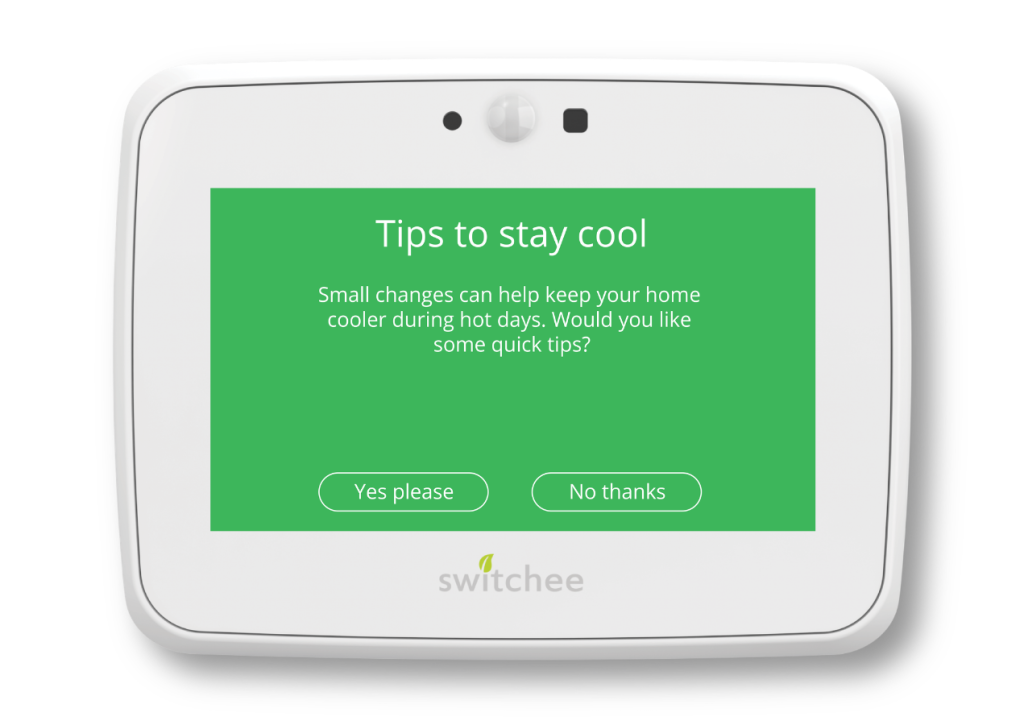
During last week's heatwave, two of our housing provider customers worked closely with their Customer Success Managers to do exactly that. Together, they delivered seasonal guidance directly to more than 1,700 homes through the Switchee device, helping residents access practical advice while temperatures remained high.
Using existing communication templates, both housing providers were able to prepare and deliver campaigns in just a matter of minutes.
The response was immediate:
For social landlords, that's more than a successful communication campaign. It demonstrates that residents engage with timely, relevant advice when it's delivered through a trusted communication channel at the moment it's needed most.
Perhaps the most interesting finding was how residents chose to engage.
Around half of residents opted to receive a series of practical, bite-sized tips they could put into practice immediately, while the remaining residents preferred to go directly to official NHS and Government guidance.
Neither approach was better than the other.
Instead, it reinforced an important lesson: residents consume information differently, and effective communication should give them the choice to access information in the way that works best for them.
Among residents who chose the practical advice, engagement remained consistently high throughout the journey, with very little drop-off between each step. That suggests the advice wasn't simply opened; it was genuinely useful.
For many residents, these campaigns weren't just reminders that it was hot. They provided practical steps residents could take to keep their homes cooler, along with access to trusted health advice if needed.
Effective communication starts long before the first message is ever sent.
Housing providers first need to understand which homes may require additional support.
Our Homescan: Overheating report provides a portfolio-wide view of overheating risk across an organisation's housing stock, helping teams move beyond reactive responses and identify homes that may require attention during periods of extreme heat. The report not only identifies homes at risk of overheating, but also helps housing providers understand whether elevated temperatures are being driven by external weather conditions or internal heating use, supporting more informed intervention.
Underpinning the report is Switchee's enhanced Overheating metric. Rather than relying on temperature alone, our Overheating metric combines indoor temperature and relative humidity to calculate a more representative 'feels like' temperature, providing a better indication of how residents are likely to be experiencing the heat. By accounting for humidity as well as temperature, housing providers gain a more meaningful understanding of resident comfort and the potential health implications associated with prolonged overheating.
Together, the Homescan: Overheating report and enhanced Overheating metric help housing providers identify silent risks across their housing stock, prioritise resources more effectively, and make informed decisions about where resident support is likely to have the greatest impact.
Knowing a home is overheating doesn't support a resident. Acting on that insight does.
Using insights from the Homescan: Overheating report, both housing providers identified homes that may require additional support before preparing and delivering targeted resident communications during the heatwave.
The result was a coordinated response that combined portfolio-wide insight with direct resident communication.
Rather than relying solely on residents reporting that their homes are too hot, housing providers were able to identify potential risks earlier, communicate proactively, and use the insight available through the Homescan: Overheating report to help inform targeted welfare checks where appropriate.
This is where data becomes meaningful support for residents.
As housing providers prepare for Phase 2 of Awaab's Law, there is increasing emphasis on identifying hazards earlier, understanding likely causes, and demonstrating a proactive approach to resident safety. Data is an important part of that picture, but data alone doesn't improve resident outcomes. It needs to be translated into timely, practical action.
The recent heatwave won't be the last.
The housing providers best prepared for the next period of extreme weather won't be those who know which homes are overheating. They'll be the ones with a clear plan for how they'll identify risk, communicate with residents and take timely action.
Switchee brings those elements together by helping housing providers identify potential overheating risks, understand which residents may require additional support, and communicate quickly when action is needed.
If you're already using Switchee, speak to your Customer Success Manager about reviewing your Homescan: Overheating report and preparing your resident engagement strategy ahead of the next period of hot weather.
If you're exploring how technology can help you better understand Overheating risk and engage residents proactively, we'd love to show you how housing providers are already using Switchee to identify risk earlier, prioritise support, and turn insight into meaningful action.
Because identifying overheating is only the first step.
What comes next is what makes the difference.